Quanto Exchange Review: Perpetuals on Solana with Any Collateral

Imagine using your most volatile meme coin holdings as collateral to short Bitcoin, without ever converting them into USDC. For years, decentralized exchanges (DEX) forced traders to lock up stablecoins or major assets like ETH just to open a position. Quanto is a perpetual decentralized exchange built on the Solana blockchain that allows users to trade with flexible, multi-asset collateral models. Launched in late 2024 by an anonymous team known as 'Solana Perp Labs', Quanto aims to fix the rigidity of traditional perp DEXs by letting you use almost any Solana-based asset as margin.
But does this flexibility come at the cost of safety? Or is it the missing link for retail traders who want high leverage without the hassle of constant conversions? This review breaks down how Quanto works, its fee structure, the risks of using volatile collateral, and whether it’s worth your time in October 2026.
What Makes Quanto Different?
Most perpetual exchanges require you to deposit USDT, USDC, or ETH. If you’re holding SOL, JUP, or a niche memecoin, you have to sell or swap those assets first. That means paying transaction fees twice and potentially realizing taxable events just to enter a trade. Quanto removes this friction.
The platform operates on a non-custodial model, meaning you keep control of your keys via wallets like Phantom or Backpack. Its core innovation is the "any collateral" feature. You can deposit Fartcoin, WIF, or BONK directly into the protocol to back a perpetual position on BTC or SOL. The system automatically calculates the value of your collateral in real-time. If your collateral crashes, your liquidation price moves closer. It’s powerful, but it requires careful management.
| Feature | Quanto | Hyperliquid | Aster |
|---|---|---|---|
| Blockchain | Solana | Ethereum L2 (Arbitrum-like) | BNB Chain |
| Collateral Type | Any Solana Asset | USDC / HLP | USDT / BNB |
| Maker Fee | 0.02% | 0.025% | 0.03% |
| Taker Fee | 0.05% | 0.075% | 0.08% |
| Max Leverage | 100x | 50x | 20x |
| Avg. Settlement Time | 400-600ms | ~1s | ~3s |
How the Platform Works
Quanto leverages Solana’s Sealevel parallel processing engine. This allows trades to settle in sub-second times, which is critical when you are dealing with high-frequency volatility. The order book matches orders off-chain for speed but settles on-chain for security. This hybrid approach gives you the speed of a centralized exchange (CEX) with the transparency of a DEX.
Setting up is straightforward if you already use Solana. Connect your wallet, select a pair (like BTC-PERP), and choose your collateral. Here is the catch: not all collaterals are treated equally. Highly volatile assets have higher maintenance margins. While standard collateral might require a 110% health ratio, volatile meme coins often trigger liquidations at 105%. You need to monitor your positions more closely than you would on a stablecoin-backed platform.
- Grid Trading: Quanto supports automated grid strategies with customizable intervals (min 0.5%).
- Hidden Orders: You can hide trade size until execution to avoid slippage impact.
- Cross-Margin: Use one asset to back multiple positions across different pairs.
Fees and Tokenomics
Costs matter. Quanto charges 0.02% for makers and 0.05% for takers. These rates are competitive, especially compared to Hyperliquid’s 0.075% taker fee. Plus, since you are on Solana, network gas fees are negligible-often less than $0.001 per transaction.
The native token, QTO, serves two main purposes: governance and fee discounts. Holding QTO reduces your trading fees by up to 15%. More importantly, 70% of all trading fees generated by the platform are burned. This deflationary mechanism has reduced the circulating supply significantly since launch. As of late 2025, QTO had a market cap hovering around $5 million, making it a micro-cap play with high volatility potential.
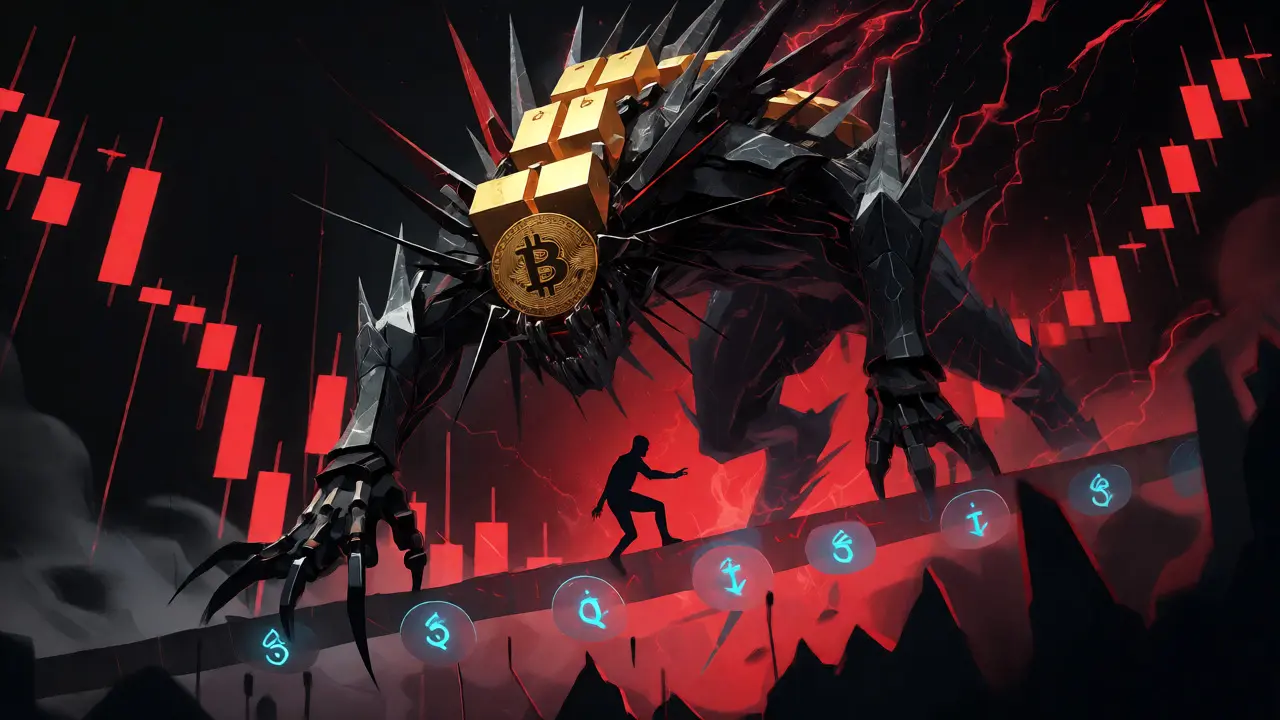
Risks: The Double-Edged Sword of Volatile Collateral
Let’s be honest: using meme coins as collateral is risky. Dr. Elena Rodriguez, a DeFi analyst, noted that while this unlocks portfolio efficiency, it creates systemic risk during crashes. If you use WIF as collateral to long SOL, and both SOL and WIF drop simultaneously, you face a double whammy. Your collateral value shrinks exactly when your position needs support.
In September 2024, a sharp market swing caused some liquidation engines to lag. Users reported delays in auto-liquidations, leading to unexpected losses. Quanto responded by implementing "Collateral Shield," a feature that temporarily restricts highly volatile assets from being used as collateral during extreme volatility spikes. This was a necessary patch, but it highlights that the tech is still maturing.
Another concern is liquidity depth. Quanto’s order books are thinner than giants like Binance or even Hyperliquid. For small trades ($100-$5,000), slippage is minimal. But if you try to move $50,000+ in a single click, you might suffer significant price impact. Institutional traders may find the depth insufficient, but for retail users, it’s usually adequate.
User Experience and Community
The interface is clean but has a learning curve. New users report taking about 20-25 minutes to place their first complex trade, mostly due to understanding the collateral ratios. Documentation is available in 12 languages, including French, which helps accessibility.
Community support is active. The Telegram channel has over 8,000 members, with response times averaging under 30 minutes for technical queries. Trustpilot reviews sit at 4.1/5, with praise for low fees and complaints about occasional UI glitches during high traffic.
One user, u/SolanaMaximizer, shared a success story: "I shorted SOL using my BONK holdings as collateral. Saved $200 in conversion fees and caught the dip perfectly." Conversely, another user lost $1,200 due to a delayed liquidation during a flash crash, though they received partial compensation later.

Is Quanto Right for You?
Choose Quanto if:
- You hold diverse Solana assets and don’t want to convert them to USDC.
- You prefer low fees and fast settlement speeds.
- You are comfortable managing higher liquidation risks.
Avoid Quanto if:
- You are a large institutional trader needing deep liquidity.
- You prefer simple, stablecoin-only collateral models.
- You cannot monitor positions frequently during volatile markets.
Final Verdict
Quanto is an innovative player in the Solana DeFi ecosystem. It solves a real problem: capital inefficiency for holders of altcoins. The "any collateral" model is a game-changer for power users who understand leverage mechanics. However, it demands vigilance. The thin liquidity and volatile collateral risks mean it’s not a set-and-forget platform.
If you are already deep in the Solana ecosystem and looking to optimize your trading capital, Quanto is worth testing with small amounts. Start with stable collateral, then experiment with volatile assets once you understand the liquidation triggers. Keep an eye on the roadmap; cross-chain support for Ethereum and Arbitrum is slated for 2026, which could broaden its appeal beyond Solana die-hards.
Do I need KYC to use Quanto?
No, Quanto is a non-custodial decentralized exchange. You connect your Solana wallet (like Phantom or Backpack) and start trading immediately without providing personal identification documents.
What assets can I use as collateral?
You can use any supported Solana SPL token. This includes stablecoins (USDC, USDT), major tokens (SOL, JUP), and many meme coins (WIF, BONK, POPCAT). Each asset has a specific haircut and maintenance margin requirement.
Is Quanto safe?
The smart contracts have been audited by CertiK. However, DeFi always carries risks such as smart contract bugs, oracle failures, or extreme market volatility causing liquidation delays. Always start with small amounts.
How much leverage can I get?
Quanto offers up to 100x leverage on major pairs like BTC-PERP and SOL-PERP. Lower leverage is recommended for volatile collateral types to prevent premature liquidations.
What is the QTO token used for?
QTO is the governance token. Holders can vote on protocol upgrades and receive tiered fee discounts (up to 15%) based on their holdings. 70% of trading fees are burned, reducing supply over time.